02.11.2026 · 7 min read
The Real Cost of Streamer Marketing in iGaming
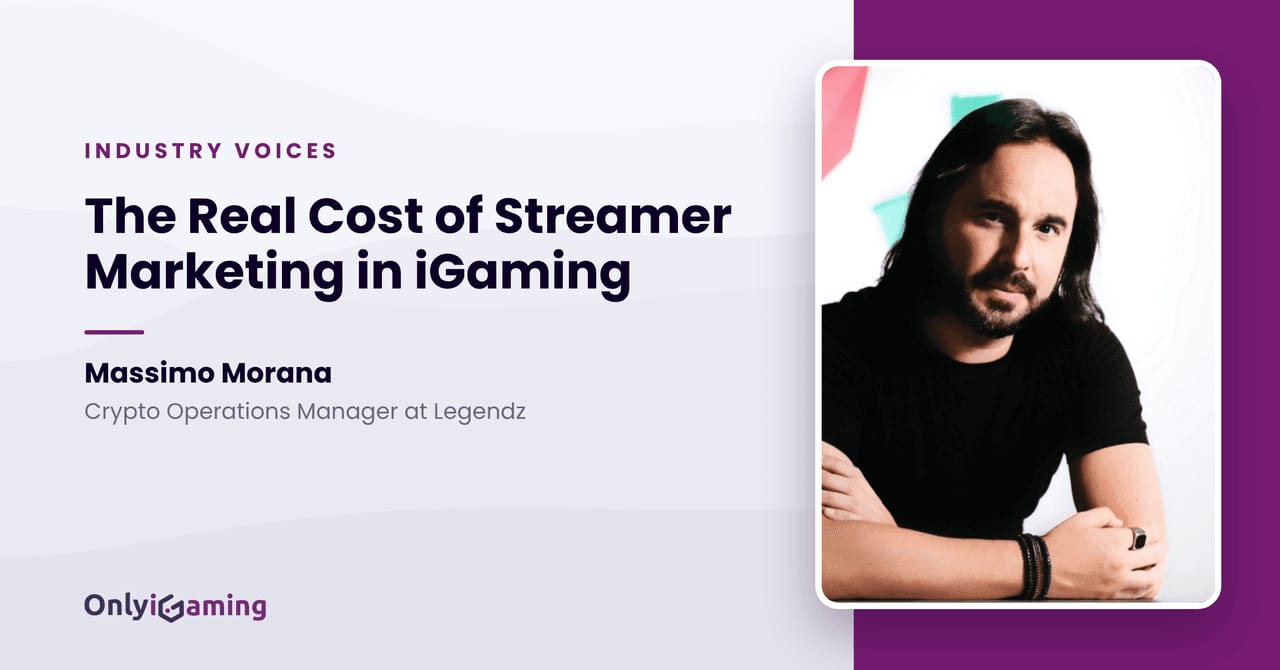
The Real Cost of Streamer Marketing in iGaming
A successful partnership should leave a casino with more than a temporary rise in deposits.
By Massimo Morana
I recently had a conversation with an established gambling streamer about the business behind the follower count.
I put a blunt question to him: if the funded playing balance, sponsored giveaways and next contract renewal disappeared, what would the audience still come back for?
A creator can appear to have built an empire while operating invoice to invoice, with a ring light. Sponsorship is a legitimate business model. The vulnerability is having so little independent audience loyalty that one renewal determines whether the business survives.
Operators face a similar test. A partnership brings registrations, deposits and wagering activity. The campaign ends, activity falls away and the casino needs another expensive deal to replace it. What did the investment leave behind?
Having worked as a streamer, led streaming teams and managed creator partnerships before moving into casino operations, I understand why both parties want certainty. A creator needs reliable income; an operator needs an investment it can justify. A strong partnership has to address both.
Decide what the fee is buying
Follower counts are a starting point for discovery. They tell us very little about audience eligibility, purchasing intent or the trust behind a recommendation. Adding followers across platforms can also count the same people more than once.
Before discussing price, I want to understand who regularly watches, where those viewers live, whether the audience is appropriate for gambling marketing and how previous sponsorships were received. A large audience with little relevance to the product can be an expensive mismatch.
That does not mean streamers belong exclusively at the awareness stage. Creators can introduce a brand, explain its product and generate conversions. IAB’s 2025 research into US creator advertising identified both awareness and sales among advertisers’ campaign objectives. It also highlighted creator reputation and audience alignment as important selection criteria. [1]
The objective should shape the agreement. A campaign introducing an unfamiliar casino needs measures of relevant reach, watch time and growing interest. A partnership built around acquisition needs agreed definitions of qualifying customers, attribution and acceptable acquisition cost.
Both deserve commercial accountability. Neither should be sold under assumptions the other party has never agreed to.
Write down the partnership before judging it
Many disputes begin with the details nobody recorded. A brand believes it bought an integrated campaign. The creator believes they agreed to several broadcasts. Both can deliver against their own understanding and still feel let down.
Before signing, I would expect six areas to be explicit:
Streaming commitments. Number and minimum length of broadcasts, scheduling, cancellations and replacement sessions.
On-stream delivery. Brand placement, code mentions, links, agreed game coverage and room for the creator’s own presentation style.
Off-stream content. Posts, clips and community announcements, with platforms and deadlines.
Content rights. Ownership, editing permissions and any paid advertising licence, including its duration after the partnership ends.
Exclusivity. Named competitors or a clearly defined category, territory and duration, with any restriction after termination proportionate and priced.
Payment and evidence. Delivery milestones, reporting access, acceptance criteria, payment dates and a process for resolving disagreements.
Funded balances need their own clarity: permitted use, treatment of winnings and withdrawal rights. Performance incentives also need precise definitions. A fixed fee can pay for production and distribution, with a separate component rewarding agreed results.
Compliance belongs in the same conversation. Audience suitability, permitted markets, sponsorship disclosure and responsible gambling safeguards should influence the brief from the outset. In Great Britain, the Gambling Commission expressly holds licensees responsible for the third parties they contract with.
Follow the customer beyond the first deposit
From the operator’s side, a promising acquisition report is only the beginning of the assessment.
Deposits are player funds entering an account. Wagering volume records activity. Neither figure, by itself, establishes what the operator earned or whether the campaign was profitable.
The commercial review should follow the acquired cohort over agreed periods, such as 30, 60 and 90 days. It should examine customer activity and contribution after the relevant bonuses, operating costs, commissions and campaign spend, using a consistent calculation that avoids counting deductions twice.
It should also separate creator demand from operational friction. If viewers register but encounter failed payments, confusing verification or unclear offer terms, the conversion problem needs investigation across the business. Those failures can waste the interest the creator generated.
Tracking links and codes remain useful, but attribution is not proof that every recorded customer was additional. Someone might watch a stream, search for the casino later and register through another route. An existing customer might use a creator’s code.
Where scale allows, a controlled test can help estimate the additional conversions caused by a campaign. Google’s explanation of conversion lift illustrates the principle of comparing exposed and control groups. Applying that principle to creator activity requires a suitable design; a rise in registrations alone cannot establish causation.
Smaller campaigns may not support a robust experiment. They still need first-party reporting, agreed attribution windows and an honest account of uncertainty. A handful of deposits is a weak basis for declaring either success or failure.
Incentives matter here. Paying for a deposit count without regard to customer quality encourages optimisation around that count. Fraud remains the responsibility of whoever commits it. Clear definitions and credible verification make manipulation harder to conceal, while a disappointing result alone is no evidence of dishonesty.
Give the audience a reason to stay
Even a well-priced, well-measured partnership struggles if the casino gives people little reason to distinguish it from its competitors.
A feed of interchangeable bonus graphics, provider trailers and big-win screenshots gives a creator very little distinctive to introduce. More posts will not resolve the absence of a clear audience, identity or editorial point of view.
The same weakness appears when a Telegram group is treated as proof of community. Rewards can attract people and support participation. Membership numbers alone cannot tell us whether those people care about the brand or are waiting for the next giveaway.
I would look at what happens between promotions. Do people start conversations, return for a recognisable show, contribute ideas or engage with the brand’s own content? Would they still have a reason to follow if there were no prize that week?
This is where creators can contribute beyond a referral link. The right partner can help develop recurring formats, host conversations and produce original content that fits a defined audience. With agreed rights, that work can continue supporting the brand through its own channels.
Brand positioning should guide this work early. Product readiness, distribution and lifecycle communication need to develop alongside it. An operator cannot compensate indefinitely for a weak proposition by buying access to someone else’s followers.
Nor can identity compensate for poor service. The promise made on stream has to survive registration, gameplay, customer support and withdrawals. Those experiences determine whether the trust a creator lends becomes trust in the operator.
Make the renewal decision about what remains
At renewal, I want to understand what the partnership has added: commercially viable customer relationships, useful content rights, stronger recognition or evidence that a particular audience responds to the product. Those findings should inform the next investment.
A high fee can be justified when the value supports it. A modest fee can still be wasted when the audience, product and agreement do not fit.
Before asking a creator to lower their price, operators should be able to explain what they are buying, how they will assess it and what their own business must deliver. The partnership becomes more valuable when the audience has a reason to return after the sponsored stream ends.
About the author
Massimo Morana is Crypto Operations Manager at Legendz.io. His career spans live streaming, casino brand representation, streaming team leadership and influencer partnerships, including roles at Rootz and Mediapanther/ Reliato. He brings more than five years of experience across streaming, creator partnerships and casino operations, with a focus on connecting audience trust and content with measurable commercial outcomes.
Spotted a mistake, or have a question about this article?
Categories
Enjoyed this story?
Add OnlyiGaming as a preferred source on Google to see more of our reporting.